Referrals Bring 83% of Small Business Clients. Stop Leaving Them to Luck
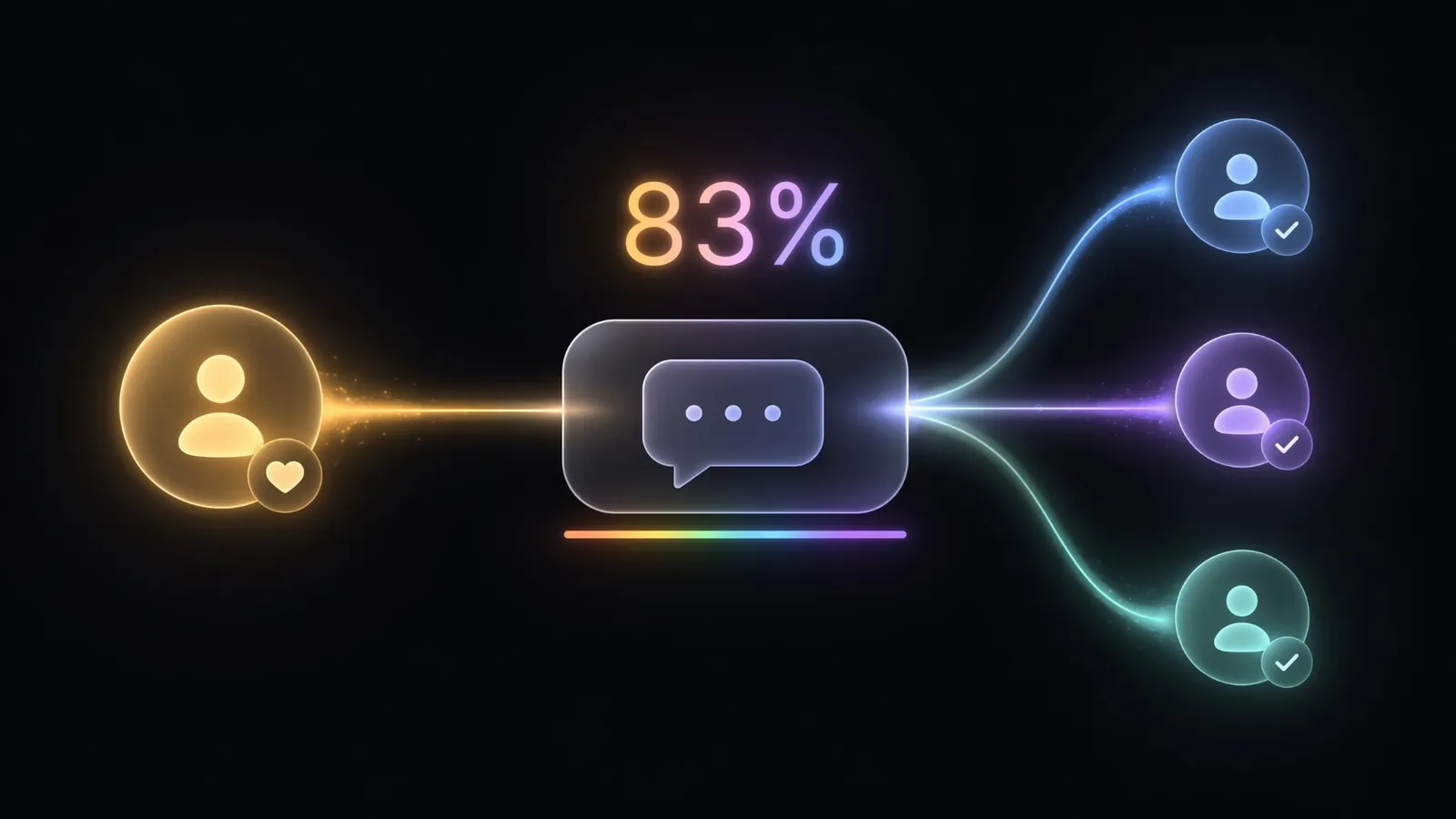
In LocaliQ's 2026 survey of over 300 small businesses, 83% named customer referrals as their best source of new clients. For businesses with ten or fewer employees, the number climbs to 87%. Now the uncomfortable part: almost none of those businesses have any process for generating referrals. Their best channel runs entirely on luck.
This post turns that luck into a system. You will get the three reasons referrals stall, the exact moment and message for asking, the honest answer on rewards, and the way to automate the ask so it happens every time without you remembering. We wire referral asks into client follow-up systems for a living, and the template below is the one that gets used because it takes ten seconds to send.
Why referrals stall (it is never because clients are unwilling)
Happy clients fail to refer you for three mechanical reasons, none of them about satisfaction:
- Nobody asked. The single biggest reason. Clients assume you are busy or do not need work. Silence reads as "no need."
- There was no moment. Even willing clients forget within days. A referral intention without an immediate action decays like any other intention.
- Referring you is effort. If recommending you means explaining your services from memory and hunting for your contact, most goodwill dies at the friction.
Notice what this means: a referral system is not about making clients happier. It is about removing three points of friction from clients who are already happy. That is a much easier engineering problem.
When to ask: the peak, not the invoice
The best moment to ask for a referral is the exact moment a client expresses satisfaction. The "thank you so much" message, the compliment on a call, the five-star review. That is the peak, and enthusiasm has a half-life measured in days.
The worst moments are the ones most businesses choose: attached to the final invoice (mixes money with favor), months later in a newsletter blast (cold), or never.
Practical rule: treat every spontaneous compliment as a trigger. Compliment received, ask sent, same day.
How to ask: the ten-second template
The ask must be effortless for you to send and effortless for them to act on. Here is the template, adjust the voice to yours:
"That genuinely made my day, thank you. Quick question: is there one person you know who struggles with [the problem you solved]? If someone comes to mind, just forward them this link: [your site or booking page]. No pressure at all, and thank you either way."
Why each piece is there: one person (not "anyone", which produces nobody), a named problem (triggers a face, not a category), a forwardable link (removes the explaining effort), and explicit no-pressure (protects the relationship the referral rides on).
Send it as a WhatsApp or email reply to their compliment, never as a standalone campaign. It is a continuation of gratitude, not a promotion.
Should you reward referrals? The honest answer
Sometimes, and carefully. For most service businesses, a monetary reward can actually cheapen the gesture: your client was giving a gift to a friend, and you turned it into a commission. What works more reliably:
- Thank loudly and specifically. A personal message when the referral converts, and a small unexpected gesture (not announced in advance) for repeat referrers.
- Reward the new client instead. "Mention [name] and your first consultation is free" makes the referrer look generous rather than paid.
- Reserve formal reward programs for transactional, high-frequency businesses (salons, delivery, retail), where a discount-for-both structure is expected and works.
The decision rule: the higher the trust involved in buying your service, the less money belongs in the referral.
Automate the trigger, keep the words human
The system fails the week you get busy, unless the trigger is automated. The pattern we build into client systems: the project-completion or positive-review event schedules the referral ask automatically, in your voice, as part of the same follow-up sequence that checks in on the client. One setup, and the ask happens after every happy ending instead of the two times a year you remember.
If your follow-up currently lives in your memory, this is one more reason to fix that layer first. It is the same plumbing described in what's actually worth automating, and wiring it is exactly what our automation systems do. And every referral that arrives should land somewhere reliable; if leads still live in a spreadsheet, that leak eats referrals too.
Your move this week
Open your messages and find the last three compliments clients sent you. Reply to each one today with the template above, adapted to your voice. Three sends, ten seconds each. For most service businesses, that single exercise produces at least one warm conversation, and it will teach you more about referral mechanics than any further reading.
Quick checklist
Before you rely on referrals arriving by luck, confirm that:
- you actually ask, rather than assuming happy clients will refer on their own
- you ask at the peak (a compliment or review), not attached to the invoice
- your ask names one person and one problem, not "anyone you know"
- your ask includes a forwardable link so referring you takes no effort
- higher-trust services skip cash rewards; you thank loudly instead
- any reward is aimed at the new client, making the referrer look generous
- the ask is triggered automatically after every happy ending, not from memory
- incoming referrals land in a CRM, not a spreadsheet that loses them
Want the automated version mapped for your business? Book a free 20-minute call. No pitch, just a look at where referral asks would fit into your existing client flow.
Too busy for a call right now? Send us your project through the contact form. It is already prefilled for this topic, so it takes two minutes. Or message us directly on WhatsApp. Either way, you get a concrete answer within 24 hours.