One Website, Three Markets: The Business Case for an EN/FR/DE Site
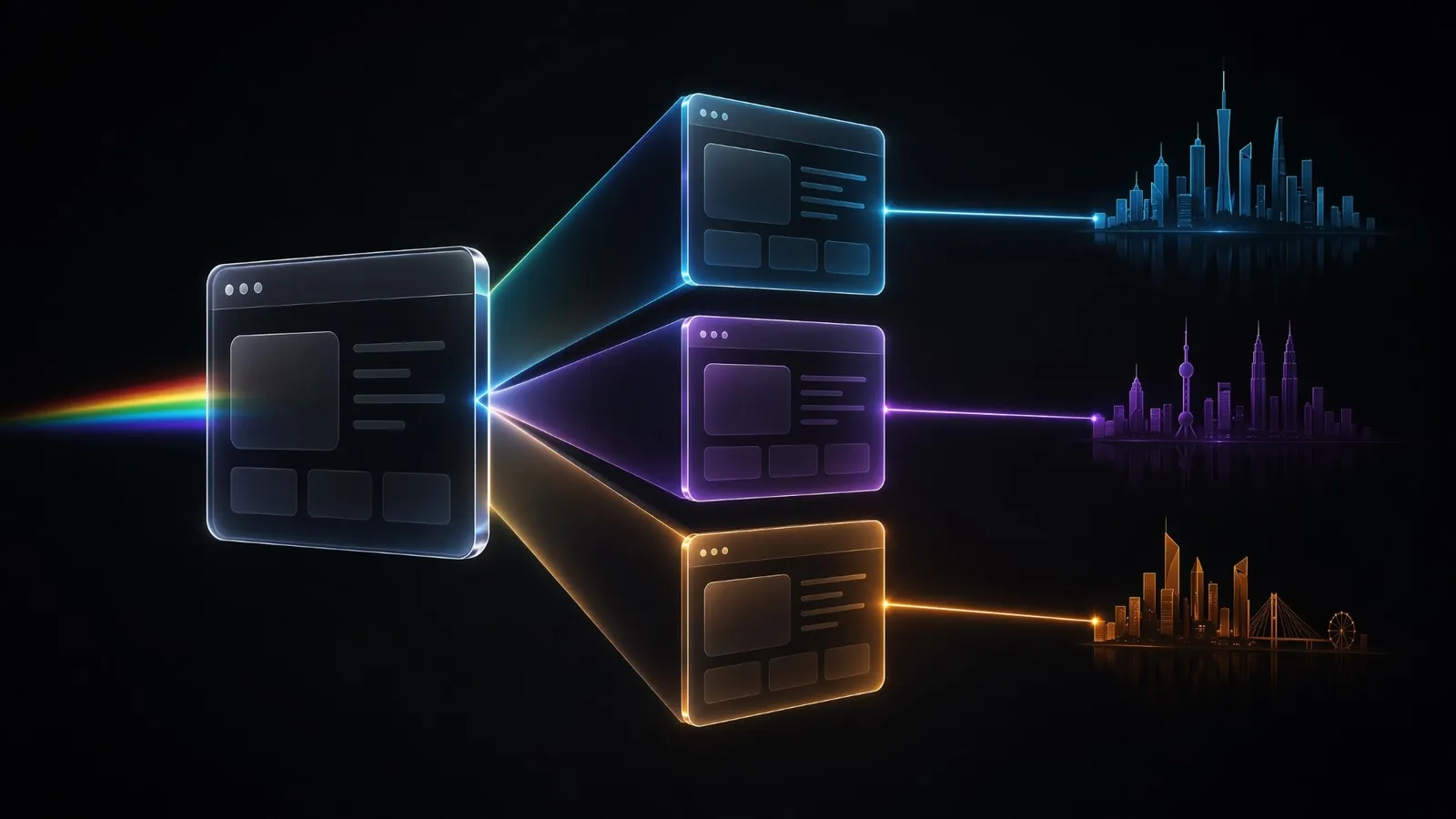
Every language your website does not speak is a market you have silently declined. An English-only site forfeits over 300 million French speakers across Europe, Africa, and Canada. A French-only site is invisible to the anglophone world. And almost everyone ignores German, the language of Europe's largest economy, where buyers strongly prefer purchasing in their own language.
This post makes the business case for a trilingual EN/FR/DE website: where each language pays, why machine translation quietly sabotages the investment, and what to translate first if the budget will not stretch to everything. The site you are reading runs in all three languages; switch the language selector and you are looking at the proof.
Where each language pays fastest
The return on a language depends on who you sell to, and the three languages buy surprisingly different markets:
- English buys global reach: the UK, North America, and the international default for B2B. It is the entry ticket, and also the most crowded room; competing in English means competing with everyone.
- French buys two very different prizes at once: the European market (France, Belgium, Switzerland, plus Quebec) and francophone Africa, from Cameroon to Senegal to Côte d'Ivoire. The second prize is the underrated one: online competition in French for business services is dramatically thinner than in English, and in francophone Africa it is thinner still.
- German buys the DACH region: Germany, Austria, Switzerland. High purchasing power and a well-documented cultural preference for doing business in German. An English site gets you considered there; a German site gets you trusted.
The compounding trick: content produced once works three times. A blog post, a service page, a case study, each translated properly, competes in three separate search markets for one production effort. That includes AI search: assistants answer French questions mostly from French sources and German questions from German sources, so each language version is a separate chance to be the cited answer.
Why machine translation kills the return
Running your site through an automatic translator feels like getting the benefit for free. What arrives instead is a site that reads foreign in every language, and readers register it in seconds even when they cannot name the problem.
The damage concentrates in exactly the places that sell:
- Formality goes wrong. French forces a choice between tu and vous, German between du and Sie. Machines choose inconsistently, and addressing a German executive with du reads as either sloppy or presumptuous.
- Idioms translate literally. Marketing language is idiom-dense, so the text that suffers most is your headline, your promise, your call to action.
- Compound words break. German builds precise compounds that machines routinely mangle into ambiguity, and long English noun chains turn into French word salad.
- The trust equation inverts. The entire point of translation is signaling "we serve your market seriously." Robotic phrasing signals the opposite: we could not be bothered. Visitors who notice do not complain; they leave, which is why the failure never shows up anywhere except your conversion rate.
Native-quality translation means a human-grade rewrite in each language's own rhythm, not word substitution. That is the standard our website translation service delivers, and this site is the working sample: the French and German versions were written to convert, not to match the English word for word.
The technical layer nobody budgets for
Translation without technical plumbing wastes part of the investment. Three pieces matter:
- Language signals for search engines (hreflang and per-language metadata), so Google shows the French page to French searchers instead of guessing. Titles and descriptions must be translated too; they are your ad in the results page.
- Translated structured data, so AI assistants and answer engines read your business facts in every language they answer in.
- A visible, manual language switcher. Auto-redirecting by location guesses wrong constantly: a Cameroonian in Berlin, a French-speaking Swiss, a diaspora customer. Detect and suggest; never force.
None of this is exotic, but it must be in the architecture. Bolting it on later costs more than building it in.
What to translate first when budget is tight
Full trilingual everything is the destination, not the required first step. The sequence that captures most of the value early:
- Homepage, services, and contact, the pages that convert. Translating these three is the minimum viable market entry.
- Booking and form flows, including confirmation emails. A French visitor who books through an English form experiences the site as half-finished exactly at the moment of commitment.
- Proof pages (testimonials, portfolio) next, because trust content converts best in the reader's own language.
- Blog content last, but deliberately: translate the posts that answer buying-intent questions first; leave the rest for the steady pipeline.
If your market includes any francophone audience, French comes before German. If you sell B2B services toward Europe, German earns its place faster than most owners expect. And the credibility mechanics of why languages win international deals are covered in how to win international clients from Africa.
Run one number before deciding: check what share of your market speaks each language, and compare it with the share of your site that speaks to them. The gap is your forfeited market. Each language you add is another door on the house; a customer who speaks only German will not knock on an English-only door.
Quick checklist
Before adding a language to your site, confirm that:
- you know what share of your target market speaks each language
- French comes before German if any of your audience is francophone
- homepage, services, and contact are translated first, not the blog
- booking flows and confirmation emails are translated, not just the pages
- a human rewrote each language, no raw machine translation on selling pages
- tu/vous and du/Sie formality is chosen consistently for your audience
- hreflang, per-language titles, and translated structured data are in place
- a visible manual language switcher exists, with no forced location redirect
Want that gap sized for your specific business? Book a free 20-minute call. No pitch, just the numbers and the sequence that fits your budget.
Too busy for a call right now? Send us your project through the contact form. It is already prefilled for this topic, so it takes two minutes. Or message us directly on WhatsApp. Either way, you get a concrete answer within 24 hours.