How to Win International Clients From Africa (Without Leaving Your City)
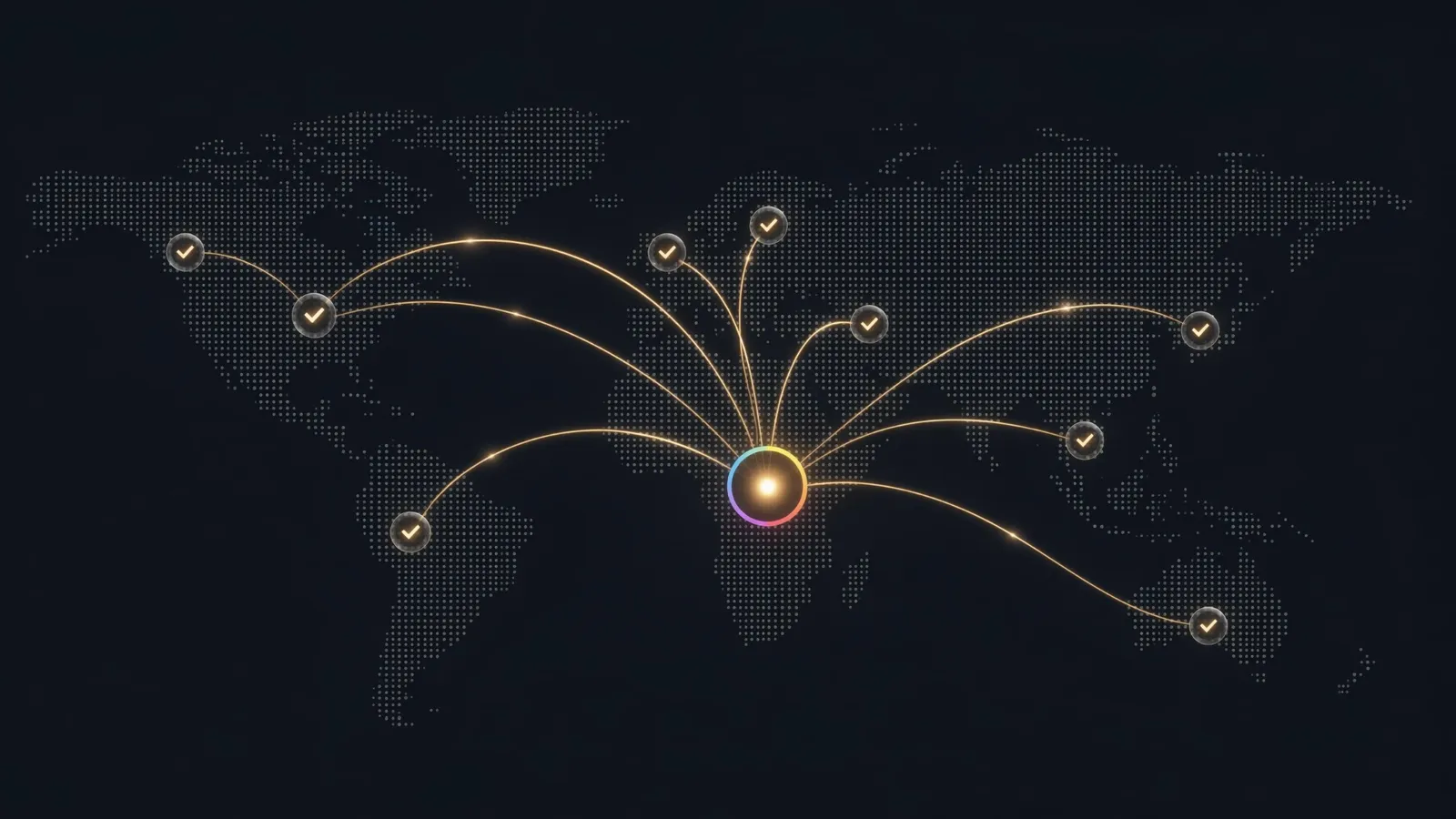
The skills gap between African professionals and their international competition is mostly a myth. The trust gap is not. A buyer in Berlin or Toronto deciding whether to wire money to someone they found online makes that call in about 30 seconds, based entirely on signals, and most African businesses lose the deal in those 30 seconds without ever knowing they were being evaluated.
This post is about engineering those signals. What international buyers actually check, the credibility stack that answers each check, and the operational setup that keeps a cross-border client once you have won them. We run this playbook ourselves: DOVMA operates from Yaoundé and serves clients across 10+ countries in three languages, so everything below is tested on our own revenue.
What an international buyer checks before paying someone abroad
Put yourself in their position: they cannot visit your office, call a mutual friend, or check a local registry they trust. So they check proxies, in roughly this order:
- Your email domain. An enquiry answered from a Gmail address versus hello@yourcompany.com is often the whole decision. It costs a few dollars a year to pass this check.
- Your website's speed and polish. Fair or not, a slow, dated site reads as "this business is struggling." The bar is not beauty; it is competence.
- Verifiable humans. Real names, real photos, a story of who is behind the business. Anonymous businesses do not receive international wire transfers.
- Proof with details. Testimonials with full names and companies, case studies with numbers, work they can click through and inspect themselves.
- Clear pricing signals. Not necessarily a price list, but evidence that money is handled professionally: stated ranges, a structured process, an actual invoice system.
- Responsiveness in their hours. A reply that arrives within their business day says "working with this person will be easy." Silence for two days says the opposite.
Notice what is absent from the list: your location. Buyers do not reject African providers for being African nearly as often as they reject unverifiable providers for being unverifiable.
The credibility stack, in build order
Each layer answers specific checks from the list above:
- Layer 1, identity (a weekend): own domain, professional email, consistent business name everywhere Google can find you.
- Layer 2, the site (the core investment): fast, mobile-clean, with your face and story on it. Multilingual matters more than most owners realize: an English site sells to London and Toronto, a French one to Paris, Brussels, and Montreal, a German one to the DACH market. Each language is a market you either speak or forfeit.
- Layer 3, proof (ongoing): after every successful project, ask for a named testimonial while the enthusiasm is fresh. Five verifiable testimonials outweigh fifty logos.
- Layer 4, operations (what keeps them): professional invoices in their currency, a booking system that speaks their timezone, contracts in plain language. This is covered next.
Cross-border operations that do not scare anyone
Winning the first call is half the game; not fumbling the mechanics is the other half.
- Invoicing: send real invoices, numbered, with your business details, in EUR or USD as the client expects. An invoice that looks improvised reopens every trust question you already answered.
- Payments: make it effortless on their side. International clients pay by card and bank transfer; have at least one friction-free option for each, and never make a European client figure out mobile money.
- Timezones: state your working hours in their timezone in your email signature, and use a booking tool that converts automatically. Missing one call because of a timezone mix-up costs more trust than a discount ever recovers.
- Communication rhythm: one proactive update per week, unprompted. The anxiety of a remote client is silence; the cure costs five sentences every Friday.
The case study you are reading
A concrete existence proof: DOVMA was built in Yaoundé, serves clients across Europe, North America, and Africa, delivers in English, French, and German, and answers on a German phone number. None of that required relocating; all of it required the stack above, built deliberately. The full story of that positioning is on our about page. Reading it shows you precisely what your future clients will be checking.
Your first three moves
Run the buyer's checklist on yourself today: search your business as a stranger would, open your site on a phone with the data connection throttled, and read your last enquiry reply as if you were in Toronto deciding whether to trust it. The three failures you find fastest are your first three moves, and layer 1 of the stack costs almost nothing to fix this week.
Quick checklist
Before pitching an international client, confirm that:
- you answer from a domain email (hello@yourcompany.com), not Gmail
- your site loads fast and looks current on a phone
- real names, photos, and a founder story are visible
- you have at least one testimonial with a full name and company
- your pricing or process signals that money is handled professionally
- you can send a numbered invoice in EUR or USD
- your booking tool and email signature show your hours in the client's timezone
- you reply within the client's business day, not two days later
Want the outside view instead? Book a free 20-minute call and we will evaluate your international readiness the way a foreign buyer would. No pitch, just the checklist result and what closing each gap would change.
Too busy for a call right now? Send us your project through the contact form. It is already prefilled for this topic, so it takes two minutes. Or message us directly on WhatsApp. Either way, you get a concrete answer within 24 hours.