Email Marketing Isn't Dead. It's the Only Channel You Own
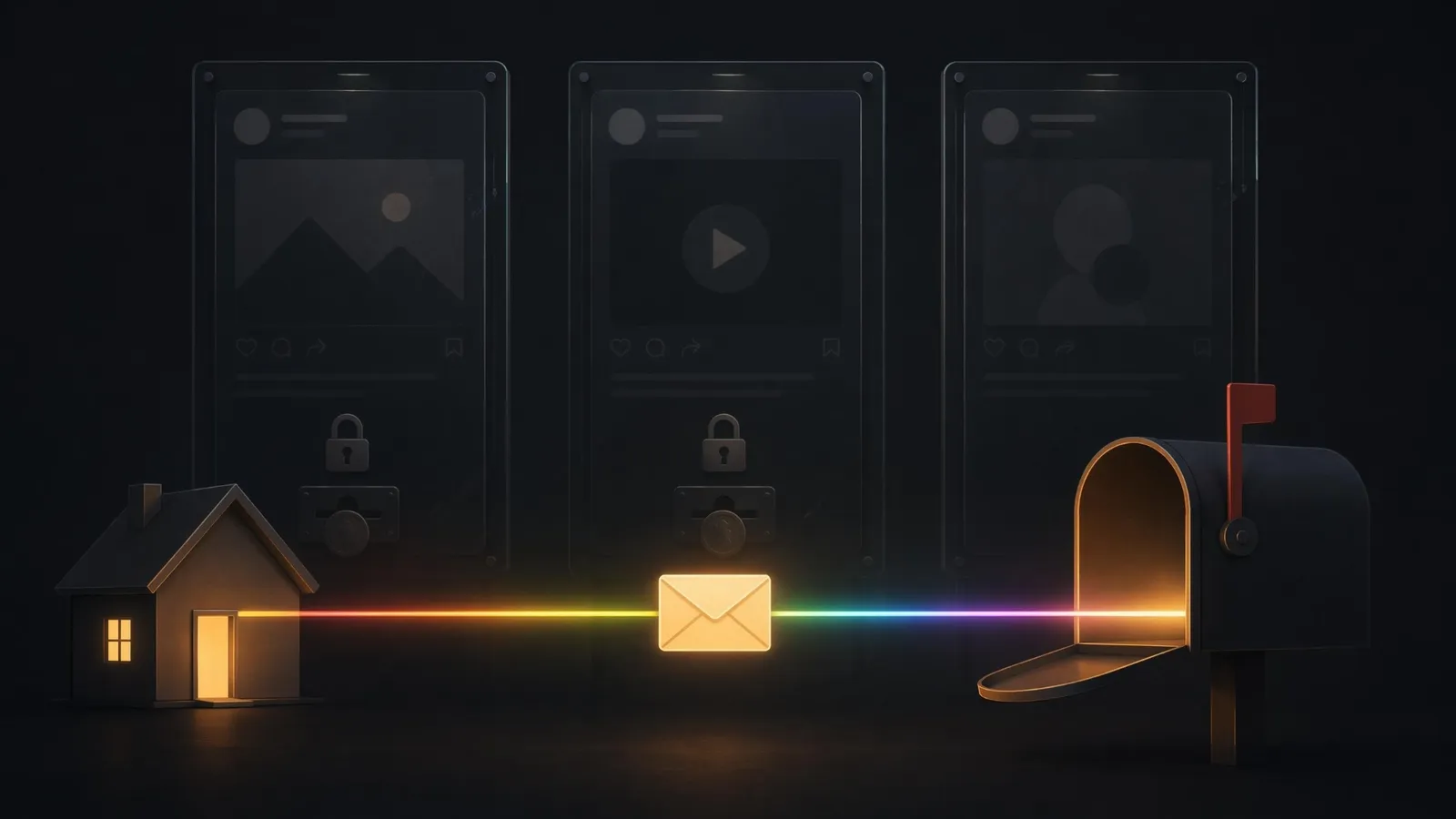
Every channel you market on is rented, except one. Social reach rises and falls with algorithms you cannot see. Ad costs climb whenever competition does. Even search rankings move under your feet. Your email list is the single audience no platform can take away, throttle, or charge you more to reach.
Small businesses know this at some level: 53% already use email marketing according to LocaliQ's 2026 survey. The problem is how. Most "email marketing" is either a dusty list that never gets written to, or promotional blasts that train people to unsubscribe. This post lays out the minimum viable email program for a service business: how to build the list without sleaze, the one email a month that actually works, and the three automated emails that quietly earn more than all the newsletters combined.
Rented audience, owned audience
The distinction deserves two minutes because it drives every budget decision after it. On rented channels, you produce content and the landlord decides distribution. Post to ten thousand followers and the algorithm may show it to three hundred. That is not a bug; it is the business model: reach is what the platform sells back to you as ads.
Email inverts the ownership. You hold the address, you choose the moment, and delivery does not depend on an engagement score. The practical rule that follows: use rented channels to be discovered, and move every valuable contact toward the channel you own. Social is the handshake; email is the relationship.
Building the list without sleaze
Nobody wants "to subscribe to your newsletter." People trade their email for something specific and useful. The honest list-building kit:
- A lead magnet that solves one real problem: a checklist, a price guide, a template. Ten minutes of value, directly related to what you sell. Your best-performing blog post usually reveals what people want more of.
- The form in the right places: after your best content, on the thank-you page of a purchase or booking, and yes, at your physical counter if you have one.
- Consent done properly: an active tick, a clear "what you'll get and how often," and an unsubscribe link that works. This is both the law in most of your markets and the reason your emails reach inboxes at all.
- What to never do: buy lists, add every business card to the list silently, or hide the unsubscribe. Each one damages deliverability, the invisible credit score that decides whether any of your future emails get seen.
The minimum viable program: one useful email a month
Forget the weekly newsletter guilt. For a service business, one genuinely useful email a month beats four promotions, and it is sustainable enough to survive your busy season.
The recipe: one insight from your actual work (a mistake you saw, a question three clients asked, a before-and-after), told in under 300 words, with one soft link to more. No "company news." Nobody's inbox misses your company news.
The bar to clear: would a recipient who never buys from you still be mildly glad this arrived? If yes, every email builds the asset. If no, every email spends it.
The three emails that earn (write once, run forever)
The monthly email maintains the relationship. The money is in three automated emails that run on triggers, not on your memory:
- The welcome email, sent the moment someone joins: deliver the promised lead magnet, say in two sentences who you help and how, and offer one clear next step. It arrives when attention peaks; it is routinely the highest-opened email a business ever sends.
- The follow-up sequence after a quote or enquiry: the polite persistence that recovers the majority of deals that die from silence rather than rejection.
- The reactivation email to past clients, twice a year: a genuine check-in with one useful thing, not a discount plea. Past clients already trust you; this is the cheapest revenue in your business, and it pairs naturally with the referral ask.
Writing these three well takes an afternoon. Wiring them to run on triggers is exactly the kind of plumbing our automation systems handle, and the same sequence logic covered in what's worth automating first.
Deliverability in three sentences
Send from your own domain, never a free address. Warm up gradually rather than blasting a cold list of 2,000. Keep the list clean: remove hard bounces and long-term non-openers twice a year, because inbox providers judge you by how wanted your mail appears.
Start with the asset you already have
You almost certainly possess an unofficial list right now: past clients, old enquiries, contacts in your phone who consented to hear from you. Collect them properly, send the first useful monthly email this week, and set up the welcome email before promoting the signup anywhere. That order matters: the front door should work before you invite people through it.
Quick checklist
Before you write off email, confirm that:
- you offer a specific lead magnet, not "subscribe to our newsletter"
- your signup form sits after your best content and on booking/purchase thank-you pages
- consent is an active tick with a clear "what and how often" and a working unsubscribe
- your one monthly email would make a non-buyer mildly glad it arrived
- a welcome email fires the moment someone joins, delivering the lead magnet
- a follow-up sequence runs after every quote or enquiry
- a reactivation email goes to past clients twice a year
- you send from your own domain and clean the list twice a year
Want your email layer designed around your actual client flow? Book a free 20-minute call. No pitch, just a map of which three automated emails would earn most in your business.
Too busy for a call right now? Send us your project through the contact form. It is already prefilled for this topic, so it takes two minutes. Or message us directly on WhatsApp. Either way, you get a concrete answer within 24 hours.