How to Build a Client Acquisition System That Works 24/7
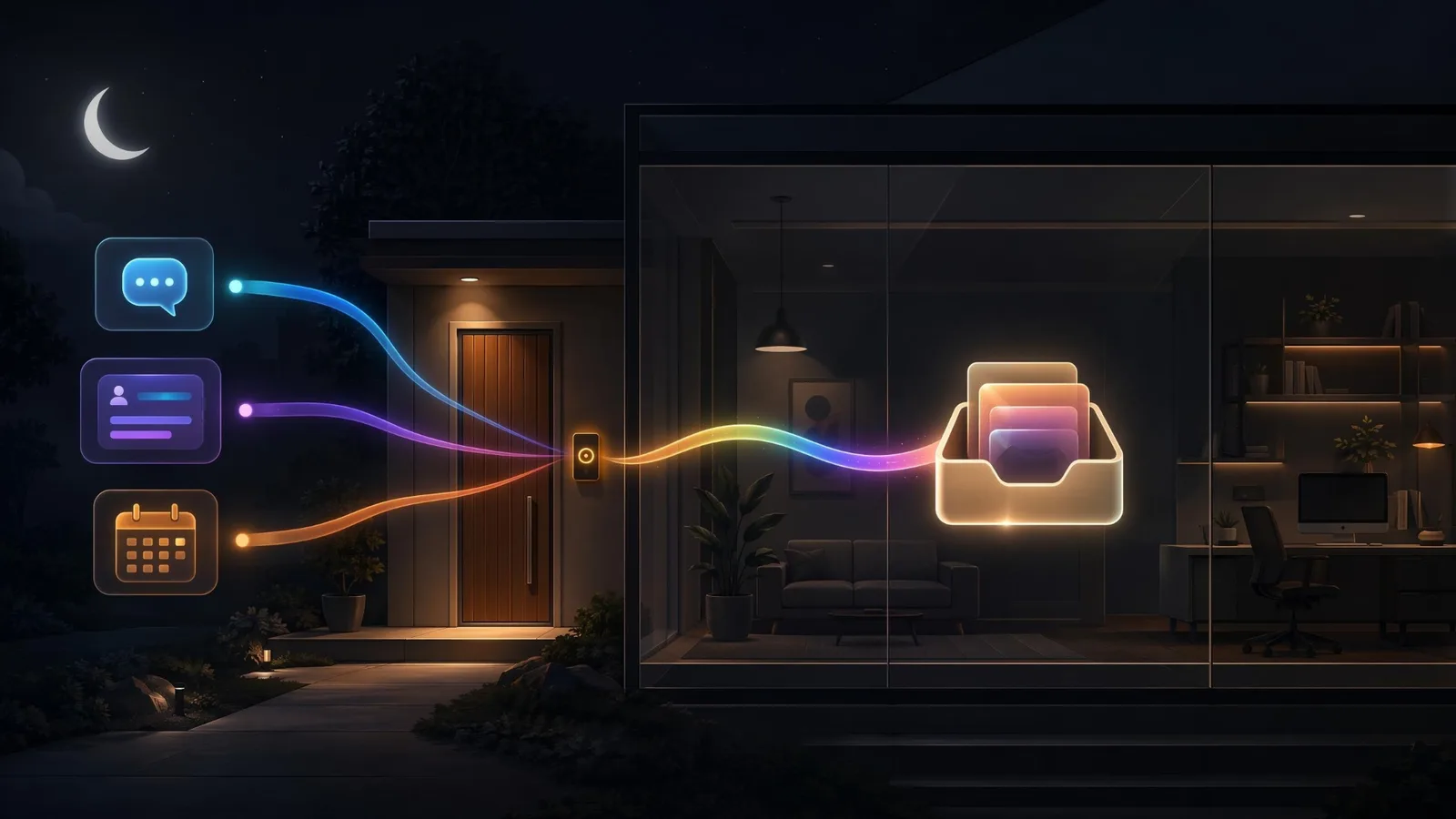
It is 9:40 on a Tuesday evening. Someone who needs exactly what you sell finds your website, likes what they see, and looks for a way to start. They find an email address. They write nothing, close the tab, and message the competitor whose site let them book a call in thirty seconds. You never learn this happened, which is the worst part: lost enquiries leave no error message.
Most service businesses do not have a client acquisition problem. They have a client acquisition system problem: the interest exists, but nothing is built to receive it. This post explains what a working system actually contains, in which order to build the five layers, and how to check whether yours has holes. We build these systems for a living, and we run the same setup on our own site, so the structure below is the one we trust with our own enquiries.
A website is not a system
A website without anything behind it is like a beautiful house entrance with no doorbell. People arrive, admire the door, knock quietly, and leave when nobody answers. The entrance did its job; the house failed.
A client acquisition system is the full path from stranger to booked conversation, and it has five layers:
- Attraction: how people find you (search, social, referrals, ads).
- Capture: how interest becomes a message you actually receive.
- Response: what happens in the minutes after someone reaches out.
- Follow-up: what happens when they do not answer, or are not ready yet.
- Measurement: how you know which layer is leaking.
"Works 24/7" does not mean you work 24/7. It means layers two and three run without you, because a meaningful share of enquiries arrives in evenings and weekends, exactly when nobody is watching the inbox. The system's job is to make sure a Tuesday-night enquiry is greeted, held, and waiting for you on Wednesday morning instead of sitting in a competitor's chat history.
Layer two: capture interest the way your customers actually communicate
The capture layer answers one question: when someone decides to contact you, how many seconds and how many decisions stand in their way?
Run this test on your own site right now. Open your homepage on a phone and count the taps until a message is actually sent or a call is actually booked. More than three taps, or a form asking eight questions before saying hello, and you are filtering out busy people, who are often the best clients.
A solid capture layer for a service business usually means three doors, because different customers prefer different doors:
- A short form (name, contact, one line about the project) for people who like to write things down.
- A WhatsApp click-to-chat link for the large group who live in chat and will never fill a form. In many African markets this is the main door, not the side entrance.
- A booking calendar for people who already know they want to talk. Letting a night-time visitor book their own slot is the purest form of a system working while you sleep.
Every door leads to the same room: one place where all enquiries land, whatever channel they came from. Enquiries scattered across an inbox, a chat app, and a notebook is how leads get forgotten by accident.
Layer three: the response layer is where most systems quietly die
Speed matters more at first contact than polish. The person who just messaged you is thinking about their problem right now; every silent hour hands them back to daily life or to a faster competitor. If this is the layer you suspect is leaking, it is usually the fastest one to fix: an automation setup that acknowledges, routes, and reminds is days of work, not months.
The response layer has an honest and a dishonest version. The dishonest version pretends a human is always available. The honest version, which works better, is instant acknowledgment plus a truthful promise: an automatic reply on the same channel the person used, confirming the message arrived and stating when a real human will answer. That reply costs nothing to run at 2 a.m., and it changes the psychology completely: the person has been received, so the clock stops racing.
Then the enquiry has to find you: a notification to your phone naming who owns the reply, and a repeat alert if nobody has responded within the hour. Everyone's lead is no one's lead.
Layers four and five: follow-up and the numbers
Most enquiries do not convert on the first exchange, and that is normal, not failure. People compare, get busy, wait for salaries or budgets. The follow-up layer is a simple, scheduled nudge: one message after two or three days, one more a week later, each offering something useful rather than pressure. Two polite follow-ups feel professional. Daily messages feel desperate. Silence feels like you did not care.
Measurement can start embarrassingly small: a count of enquiries per week, per channel, and how many became conversations. Even a spreadsheet beats memory, and when the volume grows past what a spreadsheet handles, a CRM takes over the same job. What matters is that when the number dips, you can see which layer dipped, instead of vaguely feeling that "things are slow."
The five layers also explain pricing conversations you may have had: a quote for "a website" and a quote for "an acquisition system" describe different amounts of machinery. If you want the full breakdown of what each part costs, we wrote a separate post on exactly that.
Build order: what to do this week
Do not build all five layers at once. The order that pays back fastest:
- This week: fix capture. Three doors (form, WhatsApp, booking), all leading to one inbox. This is the cheapest change with the largest effect.
- Next: the instant acknowledgment and the phone alert. Two automations, one evening of setup with the right tools.
- Then: two scheduled follow-up messages, written once, reused forever.
- Only after that: better attraction (SEO, content, ads). Pouring more traffic into a leaking funnel just loses leads faster.
- Throughout: count enquiries weekly, even if it is a notebook at first.
If your website is getting visitors but the enquiries never arrive at all, the leak may be one layer earlier than this post covers: we wrote about why websites with good traffic still fail to convert.
Quick checklist
Before calling your acquisition setup a system, confirm that:
- A stranger on a phone can send you a message in three taps or fewer
- WhatsApp, form, and booking all exist, and all land in one place
- Every enquiry gets an instant, honest acknowledgment, including at night
- A notification reaches a named person's phone, with a repeat if ignored
- At least two follow-up messages go out to enquiries that go quiet
- You can say how many enquiries arrived last week, per channel
- Nothing on the site pretends a human is online when nobody is
Want a second pair of eyes on this? Book a free 20-minute call. No pitch, just a clear look at where your current setup stops being a system.
Too busy for a call right now? Send us your project through the contact form. It is already prefilled for this topic, so it takes two minutes. Or message us directly on WhatsApp. Either way, you get a concrete answer within 24 hours.