WhatsApp Business App vs API: Which One Does Your Business Actually Need?
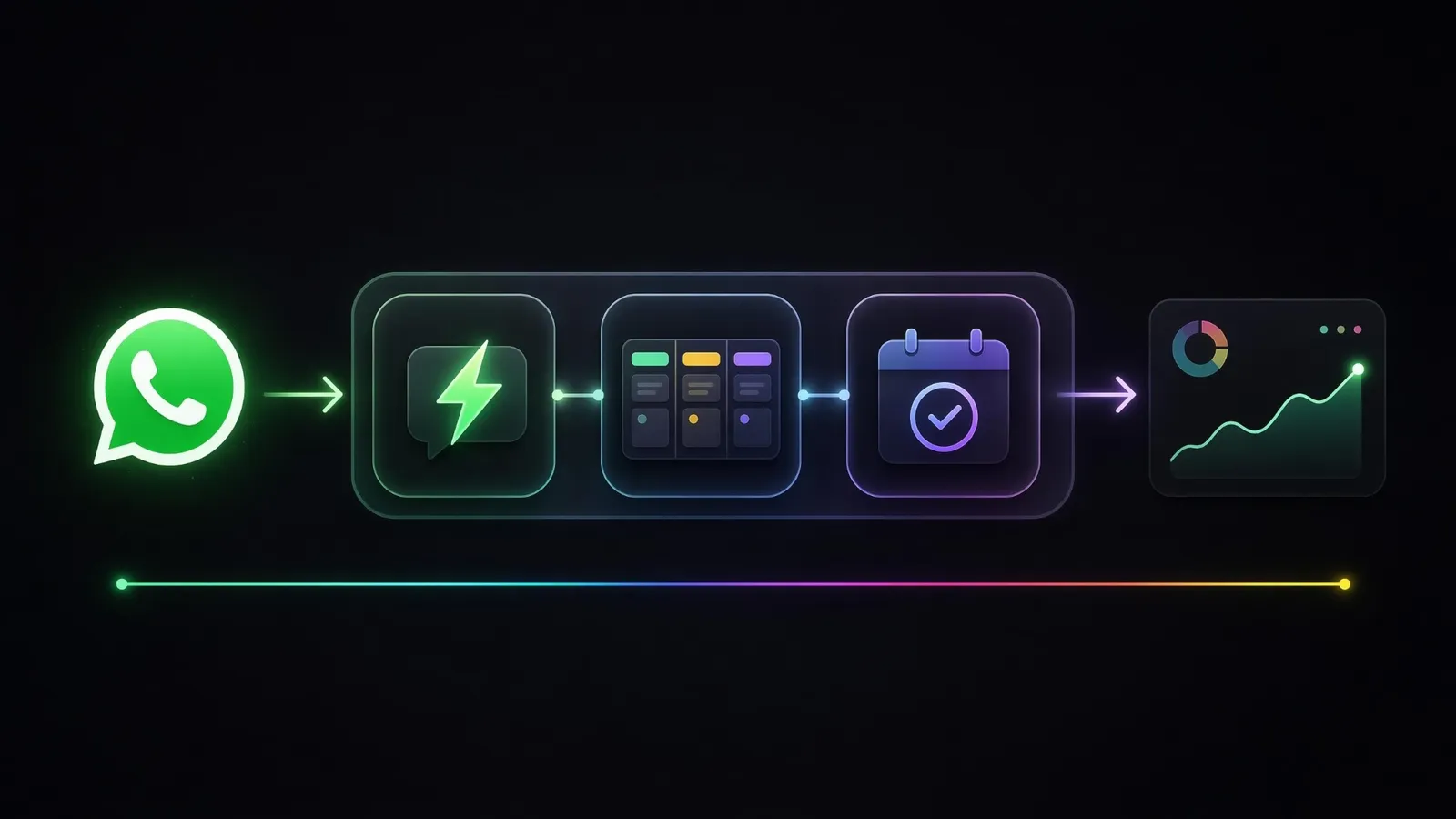
For many service businesses, WhatsApp is not a support channel. It is THE sales channel, the place where enquiries arrive, quotes get negotiated, and deals close. Which makes it strange that the owner is usually still answering every message personally, at midnight, from the same app their teenager uses.
This post gives you the honest comparison between the free WhatsApp Business app and the WhatsApp Business API: what each one actually does, where the free app quietly hits its ceiling, and a decision rule you can apply in two minutes. We wire WhatsApp into client dashboards for a living, so you get the practical version, not the brochure version.
By the end you will know exactly which setup fits your stage, and what moving up would cost you in effort. Start with what you already have.
What the free WhatsApp Business app can do (and where it stops)
The free app covers more than most owners use. If you have not set these up, do it this week before spending anything:
- Business profile: hours, address, website link, catalog of services with prices.
- Greeting and away messages: an automatic first reply, so a 2 a.m. enquiry gets acknowledged instantly.
- Quick replies: saved answers for the ten questions you type every day ("/price", "/location").
- Labels: tag chats as New lead, Paid, Pending, so the inbox becomes a rough pipeline.
Now the ceiling, and it arrives faster than expected:
- It is bound to one phone and a handful of linked devices. The business lives in one pocket. Holiday, illness, or a lost phone means the sales channel goes dark.
- Broadcasts only reach people who saved your number. Your "announcement to all customers" quietly delivers to a fraction of the list.
- Nothing connects to anything. Leads do not flow into a CRM, bookings do not sync with a calendar, and no report exists of how many enquiries came in or how fast anyone replied.
- Automation stops at two canned messages. No flows, no routing, no follow-ups.
The pattern behind every one of these limits: the app is built for one person chatting, not for a business operating. If your leads are hiding inside WhatsApp chats like lost keys, this ceiling is why.
What the API unlocks
The WhatsApp Business API (Meta calls it the Cloud API) has no app interface of its own. It is a pipe that connects WhatsApp to your systems, usually through an integration partner or your own website's backend. If the free app is a doorbell, the API is the smart home wiring: the doors open at the right moment, the owner gets alerts, and nothing depends on one person standing in the hallway. That sounds more technical than it is, and it changes the channel completely:
- Real automation: instant replies that qualify the lead ("What service do you need? What is your budget range?"), booking confirmations, reminders before appointments, follow-ups after quotes.
- CRM sync: a lead who messages you on WhatsApp appears in your dashboard with name, number, and conversation context. Nobody retypes anything, nobody forgets anyone.
- Team access: several people answer from one number, with the history visible to everyone. The business stops living in one pocket.
- Template messages: pre-approved notifications you can send outside the 24-hour reply window, like "your appointment is tomorrow at 10:00."
Two honest caveats. First, the API involves usage-based fees from Meta, small per conversation but real at volume. Second, it requires Meta business verification, which takes some paperwork and patience. Neither is a reason to avoid it; both are reasons to move when the volume justifies it, not before.
The two-minute decision rule
Answer three questions:
- Do you get fewer than roughly 10 enquiries a day, and answer them yourself? Stay on the free app. Set up greeting messages, quick replies, and labels properly, and you have squeezed everything free out of the channel.
- Is more than one person answering, or are leads slipping because replies come late? You have outgrown the app. The API with a shared inbox and auto-replies is the fix, and it usually pays for itself with the first lead that would have gone cold.
- Are WhatsApp enquiries feeding a business that also has a website, booking, and ads? Then the API is not optional; it is the missing wire. Leads from every channel should land in one CRM, and WhatsApp is usually the channel leaking most. Connecting it is exactly what our automation systems do: a WhatsApp message becomes a CRM lead with an automatic first reply, without you touching a thing.
If you are between stages, stay on the app one month longer rather than upgrading one month early. The API rewards volume; it does not create it.
Do this before deciding anything
Track one number for a week: how many WhatsApp enquiries arrive, and how long the first reply takes. Owners guess 5 messages and 10 minutes; the log usually says 20 messages and 3 hours. That single gap, enquiries times delay, is the size of the leak, and it tells you which side of the decision rule you are on.
Once your leads flow somewhere instead of dying in a chat thread, the next problem is what to automate around them. That is covered in what's actually worth automating for a small service business.
Quick checklist
Before choosing between the app and the API, confirm that:
- your business profile, greeting message, quick replies, and labels are fully set up in the free app
- you have logged one week of real enquiry volume and first-reply times
- you know how many people need to answer from the business number
- you know what happens to a WhatsApp lead after the conversation ends
- broadcasts actually reach your customers (they saved your number) or you need templates
- you have compared Meta's per-conversation fees against the value of one saved lead
- your business verification documents are ready if the API is the answer
- you are upgrading because volume demands it, not because the feature list looks nice
Want your current WhatsApp flow mapped honestly? Book a free 20-minute call. No pitch, just a clear picture of where messages are leaking and whether the API is worth it for your volume.
Too busy for a call right now? Send us your project through the contact form. It is already prefilled for this topic, so it takes two minutes. Or message us directly on WhatsApp. Either way, you get a concrete answer within 24 hours.